
ISO 20000 Service Level Agreement (SLA) Template


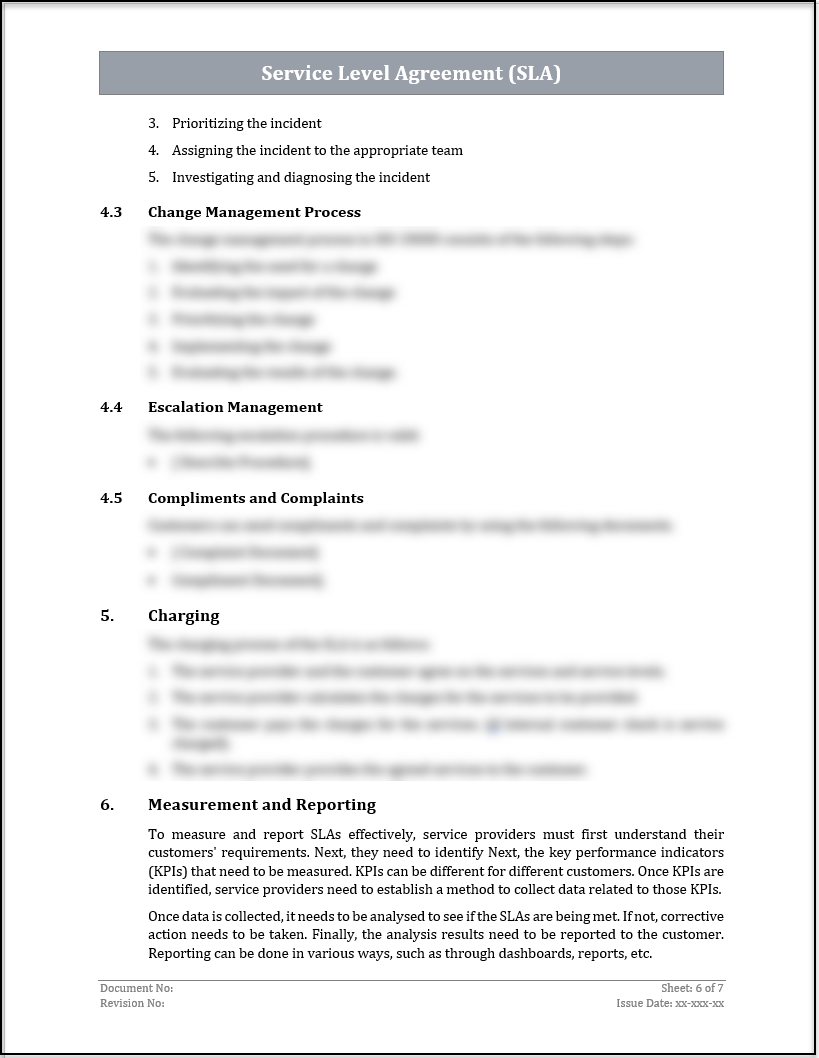



A Service Level Agreement (SLA) template ISO 20000 is a formal document that outlines the minimum levels of service to be provided by a service provider. It is based on the requirements of ISO 20000, an international standard for IT Service Management, and is designed to ensure that the service provided meets the customer’s expectations. The SLA template provides a framework for the service provider and customer to agree on the service levels, responsibilities, and other operational parameters. It also defines the metrics that will be used to measure the performance of the service provider and the customer.
The SLA template is intended to be a living document, so it should be updated as needed to ensure that all parties are aware of and agree to the service levels. The SLA template should include a clear definition of the services to be provided, the quality of service to be provided, the service availability and response times, and the service costs. Additionally, the SLA should detail how the service will be monitored and measured for compliance with the service levels.